
How Much Toothpaste Should Children Use? A Parent’s Guide
Brushing your child’s teeth twice a day is one of the simplest ways to support good oral health. But many parents have another important question: How much toothpaste should a child actually use?
Using the right amount of toothpaste is important because young children may swallow toothpaste while learning to brush. At the same time, using an appropriate amount of fluoride toothpaste helps provide protection against tooth decay.
From the first tooth to the teenage years, the recommended amount of toothpaste changes as children grow. Parents can make brushing safer and more effective by knowing how much toothpaste to place on the toothbrush and by supervising young children during brushing.
If you are looking for children’s dental care in Ludhiana, regular dental checkups can also help parents understand their child’s individual oral health needs.
Why Is the Amount of Toothpaste Important?
Toothpaste is not simply something that makes brushing feel fresh. Fluoride toothpaste can help strengthen tooth enamel and reduce the risk of cavities.
However, young children often do not know how to spit toothpaste properly. They may swallow some of it while brushing.
This is one reason parents should control the amount of toothpaste used by younger children rather than covering the entire toothbrush with toothpaste.
The goal is to use enough fluoride toothpaste to provide dental benefits while encouraging children to spit rather than swallow it.
How Much Toothpaste Should a Baby Use?
Parents should begin brushing as soon as the first tooth appears.
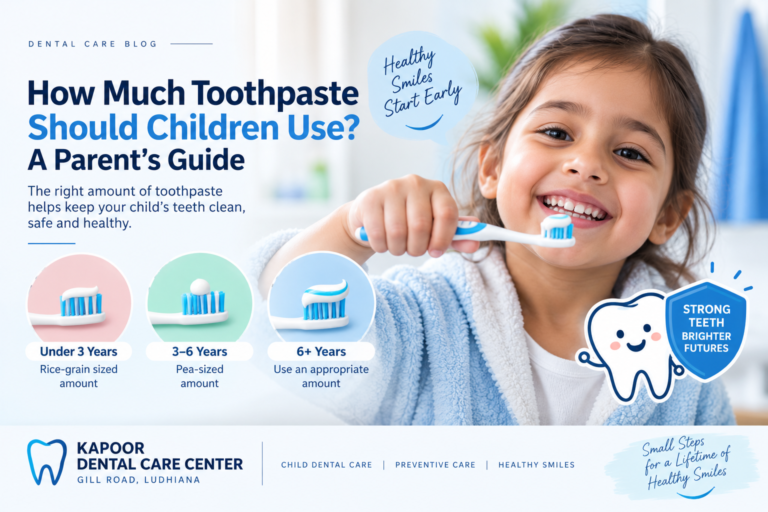
For children younger than 3 years, a smear or rice-grain-sized amount of fluoride toothpaste is generally recommended.
The amount should be very small—just enough to lightly cover the bristles.
Parents should brush the child’s teeth twice a day and supervise the process.
At this age, children typically cannot brush effectively on their own, so parents should do most or all of the brushing.
How Much Toothpaste Should Children Aged 3 to 6 Use?
For children approximately 3 to 6 years old, a pea-sized amount of fluoride toothpaste is generally recommended.
At this stage, children are becoming more independent and may want to brush their own teeth.
Parents should still supervise brushing and encourage children to:
- Brush all tooth surfaces.
- Avoid swallowing toothpaste.
- Spit out the toothpaste after brushing.
- Avoid rinsing excessively after brushing if their dentist recommends simply spitting out the excess.
The exact guidance can vary based on a child’s individual dental needs, so parents should follow their dentist’s recommendations.
How Much Toothpaste Should Older Children Use?
Older children who can reliably spit and brush properly can generally use an appropriate amount of fluoride toothpaste to brush all tooth surfaces.
As children become more independent, parents should continue to make sure they brush twice every day, particularly before bedtime.
Even when children believe they are brushing properly, parents may occasionally need to check their technique and make sure they are reaching difficult areas.
Why Is Fluoride Important for Children’s Teeth?
Fluoride is a naturally occurring mineral that helps strengthen tooth enamel and can help prevent cavities.
Children’s teeth are exposed to bacteria and acids every day through food and drinks. Without proper protection and oral hygiene, enamel can become weakened over time.
Fluoride toothpaste helps support the enamel during regular brushing.
However, more toothpaste does not mean more protection. Using excessive toothpaste is unnecessary, particularly for younger children who may swallow it.
The important factors are:
- Using the recommended amount.
- Brushing twice daily.
- Using fluoride toothpaste.
- Supervising young children.
- Maintaining regular dental checkups.
What If My Child Swallows Toothpaste?
It is common for young children to swallow some toothpaste while they are learning to brush.
Parents should teach children to spit out toothpaste rather than swallow it.
If a child repeatedly swallows large amounts of toothpaste, parents should discuss the situation with a dentist or healthcare professional.
Keeping toothpaste out of children’s reach can also help prevent accidental ingestion of a large quantity.
When Should Parents Start Brushing Their Child’s Teeth?
Parents should begin cleaning their child’s mouth from infancy and start brushing as soon as the first tooth appears.
Early dental care helps children become familiar with brushing and establishes a healthy routine.
Parents should not wait until all of a child’s baby teeth have appeared before starting oral hygiene.
Baby teeth are important for:
- Chewing food
- Supporting normal speech development
- Maintaining space for permanent teeth
- Helping children develop healthy oral habits
Even though baby teeth eventually fall out, they still need proper care.
How Often Should Children Brush Their Teeth?
For most children, brushing should be done twice a day.
The two most important times are generally:
Morning:
Brushing after waking up helps clean the teeth and remove plaque that has accumulated overnight.
Before bedtime:
Night-time brushing is particularly important because children may otherwise go several hours without cleaning their teeth.
Parents should make bedtime brushing a consistent part of the daily routine.
How Long Should Children Brush?
Children should generally brush for around two minutes each time.
Younger children may find two minutes difficult to manage, so parents can make brushing more enjoyable by:
- Using a two-minute timer.
- Playing a short brushing song.
- Brushing together as a family.
- Using a child-friendly toothbrush.
- Creating a simple brushing routine.
The goal is to make good oral hygiene a normal part of everyday life rather than a chore.
How Should Parents Choose a Toothbrush?
A child’s toothbrush should be appropriate for their age and mouth size.
Look for:
- A small brush head.
- Soft bristles.
- A comfortable handle.
- An age-appropriate design.
Hard bristles are not necessary for effective brushing and may irritate the gums if excessive pressure is used.
Parents should also replace a child’s toothbrush when the bristles become worn or according to their dentist’s recommendation.
Should Parents Supervise Their Children While Brushing?
Yes, particularly for younger children.
Children develop brushing skills gradually. Even if a child can hold and move the toothbrush independently, they may not clean every surface properly.
Parents can allow children to brush first and then finish the brushing themselves.
This approach can help children develop independence while ensuring that their teeth receive adequate cleaning.
As children become older and demonstrate good brushing skills, parents can gradually reduce supervision.
Common Toothpaste Mistakes Parents Should Avoid
Several common mistakes can reduce the effectiveness of children’s oral hygiene.
Using Too Much Toothpaste
Covering the entire toothbrush with toothpaste is unnecessary.
A small amount is sufficient, particularly for younger children.
Letting Children Swallow Toothpaste
Children should be taught to spit toothpaste out after brushing.
Allowing Children to Brush Without Supervision Too Early
Young children often lack the coordination needed to clean every tooth surface properly.
Skipping Night-Time Brushing
Bedtime brushing should be treated as an essential part of a child’s routine.
Using the Wrong Toothbrush
A toothbrush that is too large or has hard bristles may make brushing uncomfortable or less effective.
Treating Baby Teeth as Unimportant
Baby teeth still need regular dental care because problems in primary teeth can affect a child’s comfort, eating, and oral development.
When Should a Child First Visit the Dentist?
Parents should not wait until their child develops a toothache before scheduling a dental visit.
An early dental visit allows the dentist to:
- Check the development of the teeth.
- Identify early signs of decay.
- Assess oral hygiene.
- Provide brushing guidance.
- Discuss fluoride and dietary habits.
- Answer parents’ questions about children’s dental health.
Regular dental visits can also help children become comfortable with the dental environment.
Children’s Dental Care at Kapoor Dental Care Center, Gill Road, Ludhiana
Parents searching for children’s dental care near me in Ludhiana can consider consulting a dental professional when they have questions about their child’s teeth, brushing habits, cavities, or oral development.
At Kapoor Dental Care Center, Gill Road, Ludhiana, parents can discuss their child’s dental concerns and receive guidance based on the child’s individual oral health.
A dental professional can also check for cavities, plaque buildup, gum problems, tooth development, and other concerns that may not be obvious to parents.
For more information about the clinic and its dental services, visit the Kapoor Dental Care Center website.
A Simple Toothpaste Guide for Parents
Child’s Age | Recommended Amount | Parent’s Role |
Under 3 years | Rice-grain-sized smear | Parent should brush/supervise closely |
3–6 years | Pea-sized amount | Supervise and help as needed |
Older children | Appropriate amount for brushing all surfaces | Encourage independent brushing and monitor technique |
These are general guidelines. Your child’s dentist may recommend different instructions depending on their dental health and individual risk of cavities.
Frequently Asked Questions
Can babies use fluoride toothpaste?
Yes. Current dental guidance generally supports using a small, rice-grain-sized smear of fluoride toothpaste as soon as the first tooth appears. Parents should supervise brushing.
What happens if my child uses too much toothpaste?
Occasionally using more toothpaste than recommended is usually not a reason for panic. However, young children should be encouraged to use only the recommended amount and spit out toothpaste rather than swallow it.
Should children rinse their mouth after brushing?
Parents should follow their dentist’s advice. In many cases, children are encouraged to spit out excess toothpaste rather than extensively rinsing, as this allows fluoride to remain on the teeth for longer.
Can children use adult toothpaste?
The important factor is the toothpaste’s fluoride content and the amount used, rather than simply whether it is marketed for adults or children. Parents should choose an age-appropriate fluoride toothpaste and follow dental professional guidance.
How often should a child’s toothbrush be replaced?
A child’s toothbrush should be replaced when the bristles become worn or damaged. Parents should also follow the recommendations provided by their dentist or toothbrush manufacturer.
Final Thoughts
Teaching children proper brushing habits from an early age can help establish a strong foundation for lifelong oral health.
For young children, remember the simple rule:
First tooth to under 3 years: rice-grain-sized smear of fluoride toothpaste.
Around 3 to 6 years: pea-sized amount of fluoride toothpaste.
Regardless of age, children should brush twice daily, and parents should supervise younger children to make sure they brush properly and spit out the toothpaste.
Regular dental checkups are equally important because professional examinations can identify problems before they become more serious.
If you have questions about your child’s brushing routine, toothpaste, cavities, or dental development, consult a dental professional. For families in Ludhiana, you can visit Kapoor Dental Care Center at Gill Road to discuss your child’s dental care needs.