
Teeth Whitening in Ludhiana: Benefits, Procedure, and Aftercare
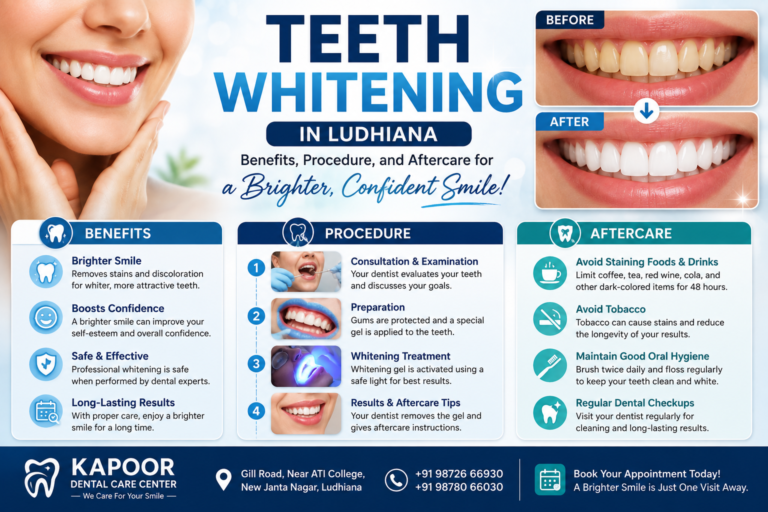
A bright, confident smile can make a big difference in how you look and feel. Over time, however, teeth can become yellow, dull, or stained due to coffee, tea, tobacco, certain foods, aging, and other factors. This is where professional teeth whitening in Ludhiana can help.
Teeth whitening is a popular cosmetic dental treatment designed to improve the appearance of natural teeth by reducing discoloration and stains. Professional whitening can be performed in a dental clinic or through dentist-supervised at-home treatment. The American Dental Association notes that hydrogen peroxide and carbamide peroxide are commonly used whitening ingredients and that temporary tooth sensitivity and gum irritation are among the most common side effects.
If you are considering teeth whitening, it is important to understand the benefits, procedure, aftercare, limitations, and whether whitening is suitable for your teeth.
For professional dental care in Ludhiana, Kapoor Dental Care Center can help you understand your cosmetic dental options and determine the most appropriate treatment for your smile.
Visit Kapoor Dental Care Center to learn more about dental services in Ludhiana.
What Is Teeth Whitening?
Teeth whitening is a cosmetic dental procedure used to make natural teeth appear lighter by reducing certain types of discoloration.
Teeth may become stained or darker because of:
- Coffee and tea
- Tobacco and smoking
- Dark-colored foods and beverages
- Poor oral hygiene
- Age-related changes
- Certain medications or dental conditions
- Surface stains accumulated over time
Discoloration can be broadly classified as extrinsic stains, which occur on the outer surface of teeth, and intrinsic discoloration, which involves the internal structure of the tooth. The appropriate whitening approach depends on the cause and severity of the discoloration.
Why Do Teeth Become Yellow?
Yellow teeth are not always caused by poor oral hygiene.
As people age, enamel can become thinner and more translucent, allowing the naturally yellower dentin underneath to become more visible. Other causes can include dietary habits, tobacco use, certain medications, trauma, and developmental conditions.
This is why a dental examination can be useful before starting whitening treatment.
A dentist can determine whether the discoloration is likely to respond to whitening and whether there are underlying dental issues that should be addressed first.
Benefits of Professional Teeth Whitening
Professional teeth whitening can offer several cosmetic benefits when appropriately planned.
1. Brighter-Looking Smile
The primary goal of whitening is to reduce tooth discoloration and create a brighter-looking smile.
The extent of improvement varies depending on the original shade and type of staining.
2. Helps Reduce Certain Stains
Professional whitening can help reduce certain extrinsic and intrinsic stains. However, not every type of discoloration responds in the same way.
3. Professional Evaluation
One major benefit of choosing a dental clinic is that your teeth can be examined before treatment.
Your dentist can check for:
- Cavities
- Gum problems
- Tooth sensitivity
- Cracks
- Worn enamel
- Existing restorations
- Other causes of discoloration
Patients with cavities, active infections, gum recession, or significant sensitivity may require dental treatment before whitening.
4. Treatment Can Be Customized
Professional whitening can be selected according to your dental condition and desired outcome.
Depending on your needs, a dentist may discuss:
- In-office whitening
- Dentist-supervised take-home whitening
- Custom whitening trays
- Other cosmetic options
5. Better Understanding of Your Expected Results
Professional consultation can help set realistic expectations. Not every patient will achieve the same degree of whitening, and some types of discoloration may require alternative cosmetic treatment.
How Does Professional Teeth Whitening Work?
Most professional whitening systems use peroxide-based whitening agents such as hydrogen peroxide or carbamide peroxide.
These ingredients work through chemical reactions that break down colored compounds responsible for tooth discoloration.
Professional whitening may be performed directly in the dental clinic or through dentist-supervised treatment at home.
Teeth Whitening Procedure in Ludhiana
The exact procedure can vary depending on the whitening system used and your individual dental condition.
A typical professional whitening process may include the following steps.
Step 1: Dental Consultation
The first step is an evaluation of your teeth and gums.
Your dentist will discuss:
- Your cosmetic concerns
- Your dental history
- Existing sensitivity
- Previous dental treatments
- Your desired result
Step 2: Dental Examination
Your dentist may examine your teeth and gums to identify cavities, gum problems, cracks, restorations, or other issues.
A clinical examination before whitening can help identify factors contributing to discoloration and determine whether bleaching is appropriate.
Step 3: Professional Cleaning
In some cases, a professional dental cleaning may be recommended before whitening.
Removing plaque and surface deposits can help reveal the natural appearance of your teeth and may improve the overall cosmetic result.
Step 4: Shade Assessment
Your dentist may assess the existing tooth shade and discuss your desired level of brightness.
This helps establish realistic expectations before treatment begins.
Step 5: Protection of the Gums
During in-office whitening, the dentist takes precautions to protect the gums and other soft tissues from the whitening material.
This is important because peroxide-based whitening gels can cause irritation if they come into prolonged contact with the gums.
Step 6: Application of Whitening Gel
A professional whitening gel containing a peroxide-based ingredient is applied according to the treatment protocol.
Depending on the system, a light may or may not be used. The ADA describes several in-office whitening approaches, including peroxide-containing gels used with or without light activation.
Step 7: Treatment and Monitoring
The whitening material is allowed to work for the recommended period while the dental professional monitors the treatment.
The exact treatment duration depends on the system and concentration used.
Step 8: Final Assessment
After treatment, the dentist may assess the appearance of your teeth and provide instructions for maintaining the result.
In-Office Whitening vs At-Home Whitening
There are two common professional approaches: in-office whitening and dentist-supervised at-home whitening.
In-Office Teeth Whitening
In-office whitening is performed under the supervision of a dental professional.
Potential advantages include:
- Professional monitoring
- Controlled application
- Faster treatment compared with many home-based approaches
- Protection of the gums and soft tissues
- Professional assessment before and during treatment
Dentist-Supervised At-Home Whitening
A dentist may also provide customized trays and professional whitening gel for use at home.
This approach generally takes longer because the whitening agent is used over multiple applications according to the dentist’s instructions. The ADA notes that dentist-supplied custom tray systems are another established professional whitening option.
The right option depends on your dental condition, schedule, expectations, and treatment plan.
Is Teeth Whitening Safe?
Professional teeth whitening can be an appropriate cosmetic treatment when properly selected and performed.
However, temporary tooth sensitivity and gum irritation are common potential side effects.
The risk can vary depending on factors such as the concentration of the whitening agent, application time, and individual sensitivity.
This is one reason professional assessment is important, particularly if you already have sensitive teeth.
Does Teeth Whitening Hurt?
Most people do not experience significant pain during whitening, but temporary tooth sensitivity can occur.
Some patients may notice sensitivity to:
- Cold water
- Hot drinks
- Cold foods
- Sweet foods
- Air
Sensitivity is generally temporary, but if discomfort is severe or persists, you should contact your dentist.
Teeth Whitening Aftercare: How to Maintain Your Results
After professional teeth whitening, your daily habits can influence how long the brighter appearance lasts.
1. Maintain Good Oral Hygiene
Brush regularly using appropriate brushing techniques and clean between your teeth.
Good oral hygiene helps reduce plaque accumulation and supports overall dental health.
2. Limit Staining Foods and Drinks
Coffee, tea, tobacco, and highly pigmented foods can contribute to staining over time.
If you regularly consume staining beverages, discuss practical ways to reduce their effect with your dentist.
3. Drink Plenty of Water
Water can help rinse the mouth after eating and drinking.
4. Avoid Tobacco
Tobacco is a major contributor to tooth staining. Avoiding tobacco can help protect your whitening results as well as your overall oral health.
5. Follow Your Dentist’s Instructions
If your dentist provides a take-home whitening system, use it exactly as instructed.
Do not increase the frequency or amount of whitening gel simply because you want faster results.
Excessive whitening can increase the risk of sensitivity and irritation and may negatively affect teeth and gums.
6. Attend Regular Dental Checkups
Regular dental visits can help identify new stains, cavities, gum disease, or other problems before they become more serious.
How Long Does Teeth Whitening Last?
Teeth whitening is not a permanent change in tooth color.
The longevity of the result varies from person to person and depends on factors such as:
- Diet
- Tobacco use
- Oral hygiene
- Age
- Type of discoloration
- Whitening method
- Regular dental care
Good oral hygiene and limiting stain-causing habits can help maintain a brighter smile for longer.
Can Teeth Whitening Remove All Types of Stains?
No.
Whitening works better on some types of discoloration than others.
Extrinsic stains caused by foods, beverages, and tobacco may respond well to appropriate whitening or professional cleaning. Some intrinsic discoloration, however, may be more difficult to treat through external whitening alone.
If whitening is unlikely to provide the result you want, your dentist may discuss alternatives such as veneers or other cosmetic treatments.
Can Dental Crowns and Veneers Be Whitened?
Conventional whitening affects natural teeth, not tooth-colored restorations in the same way.
Crowns, veneers, implants, and certain other restorations generally do not change color through conventional bleaching.
If you already have dental restorations, tell your dentist before whitening so that the treatment can be planned appropriately.
Who Should Avoid Teeth Whitening Without a Dental Consultation?
You should not assume that whitening is appropriate simply because it is a cosmetic treatment.
A dental consultation is particularly important if you have:
- Tooth sensitivity
- Cavities
- Gum disease
- Gum recession
- Cracked teeth
- Existing dental restorations
- Severe discoloration
- Dental pain
- Recent dental treatment
The dentist can determine whether these conditions should be treated before whitening.
Why Choose Kapoor Dental Care Center for Teeth Whitening in Ludhiana?
If you are searching for teeth whitening in Ludhiana, choosing a dental clinic that evaluates your oral health before cosmetic treatment is important.
Kapoor Dental Care Center provides professional dental care for patients looking to improve their oral health and smile. If you are concerned about yellow teeth, staining, or smile appearance, a consultation can help determine whether professional whitening is appropriate for you.
The goal should not simply be to make teeth as white as possible. A good cosmetic dental treatment should provide a result that looks natural and is appropriate for your individual smile.
If you are considering professional teeth whitening in Ludhiana, you can learn more about Kapoor Dental Care Center at https://kapoordentalludhiana.in/.
Frequently Asked Questions About Teeth Whitening in Ludhiana
1. What is the best teeth whitening treatment in Ludhiana?
The best whitening method depends on your teeth, type of discoloration, sensitivity, oral health, and desired result. A dentist can recommend an appropriate professional or dentist-supervised whitening option after examination.
2. How much does teeth whitening cost in Ludhiana?
The cost varies according to the whitening method, number of teeth, treatment protocol, and individual dental requirements. The most accurate way to determine the cost is to have a dental consultation.
3. How long does professional teeth whitening take?
Treatment time varies depending on the whitening system. In-office whitening is generally designed to provide results more quickly than dentist-supervised home whitening, while home treatments may require multiple applications.
4. Is professional teeth whitening better than home whitening?
Professional whitening offers dentist supervision and individualized treatment planning. Dentist-supervised home whitening can also be an effective option. Your dentist can help you choose the approach that best suits your needs.
5. How many shades can teeth whitening improve?
There is no guaranteed number of shades for every patient. Results depend on the original tooth shade, type of staining, whitening system, and individual response.
6. Does teeth whitening permanently whiten teeth?
No. Teeth can gradually become stained again due to diet, tobacco, age, and other factors. Good oral hygiene and professional dental care can help maintain the result.
7. Can sensitive teeth get whitening treatment?
Some people with sensitive teeth can still undergo whitening, but the sensitivity should be discussed with a dentist first. The dentist can determine whether whitening is appropriate and how to reduce the risk of discomfort.
8. Can yellow teeth become white again?
Many types of yellowing and staining can be reduced through professional whitening, but results depend on the cause of discoloration. Some intrinsic stains may not respond fully to external whitening.
9. Is teeth whitening safe for everyone?
No. Patients with untreated cavities, active infections, gum problems, or other oral health issues may need treatment before whitening. A dental evaluation is recommended before starting cosmetic bleaching.
10. Where can I get professional teeth whitening in Ludhiana?
If you are looking for professional teeth whitening in Ludhiana, you can consult Kapoor Dental Care Center to discuss your dental condition, cosmetic goals, and suitable whitening options.
Visit Kapoor Dental Care Center for more information.
Final Thoughts
Professional teeth whitening in Ludhiana can be an effective way to improve the appearance of a stained or discolored smile when the treatment is appropriate for your teeth.
The process starts with a dental evaluation, followed by selection of an appropriate whitening method and professional guidance on aftercare. Maintaining good oral hygiene, limiting staining habits, avoiding tobacco, and following your dentist’s instructions can help you maintain your results.
If you are considering whitening, avoid relying solely on DIY methods or aggressive whitening routines. Professional guidance can help identify the cause of discoloration and establish realistic expectations.
For patients in Ludhiana, Kapoor Dental Care Center can help you explore professional dental and cosmetic treatment options for a healthier, brighter smile.
Learn more about Kapoor Dental Care Center and its dental services.