
Flossing vs Mouthwash: Which Should Be Part of Your Daily Routine?
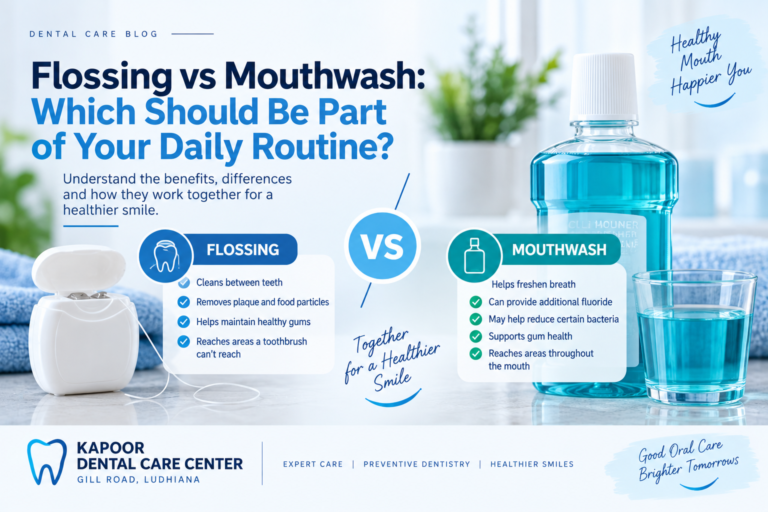
Good oral hygiene involves more than brushing your teeth. Plaque can build up between teeth and along the gumline, where a toothbrush may not reach effectively. This is why many people wonder whether flossing or mouthwash should be part of their daily routine.
The two serve different purposes. Flossing physically cleans between the teeth, while mouthwash can provide additional benefits depending on its ingredients.
Quick Answer: Flossing vs Mouthwash
Flossing or another interdental cleaning method should generally be part of your daily oral-care routine because it physically removes plaque and food debris between teeth. Mouthwash can be a useful additional step for specific needs such as cavity prevention, breath control, or certain gum concerns.
In simple terms:
🦷 Floss = cleans between teeth
🫧 Mouthwash = provides additional benefits
✅ They can often be used together rather than as substitutes.
The best routine depends on your dental health, gum condition, restorations, braces, and individual needs.
What Is Flossing?
Dental floss is designed to clean the spaces between teeth and along the gumline.
It can remove plaque and food particles from areas that a toothbrush may not reach effectively. Traditional floss is not the only option. Depending on your teeth and dental work, you may also use:
- Floss picks
- Interdental brushes
- Water flossers
Your dentist can recommend the most suitable option for your mouth.
What Is Mouthwash?
Mouthwash is a liquid rinse that can provide additional oral-care benefits.
Depending on its formulation, mouthwash may help with:
- Freshening breath
- Providing additional fluoride
- Reducing certain bacteria
- Supporting gum health
- Helping control plaque
Not every mouthwash serves the same purpose. Cosmetic rinses and therapeutic mouthwashes have different uses, so choosing one based on your particular dental needs is important.
Flossing vs Mouthwash: The Main Difference
The key difference is mechanical cleaning versus rinsing.
Flossing
Floss physically passes between teeth to disturb and remove plaque and debris. This makes it particularly useful for cleaning areas between teeth.
Mouthwash
Mouthwash moves around the mouth as a liquid and can deliver active ingredients to different areas. However, it does not physically remove plaque from between teeth in the same way that floss or another interdental cleaner does.
For this reason, mouthwash is generally considered an additional oral-care measure rather than a replacement for interdental cleaning.
Benefits of Flossing
Regular interdental cleaning can:
- Remove plaque between teeth
- Remove trapped food
- Help maintain healthy gums
- Clean areas that toothbrush bristles may not reach
- Support overall preventive dental care
Floss should be used gently. Snapping it forcefully against the gums can cause irritation.
Benefits of Mouthwash
The benefits depend on the type of mouthwash.
Fluoride Mouthwash
Some mouthwashes contain fluoride and may provide additional protection against tooth decay.
Antimicrobial Mouthwash
Certain therapeutic rinses contain ingredients that can help reduce particular oral bacteria.
Breath-Freshening Mouthwash
Cosmetic mouthwashes can temporarily improve breath odor but may not address the underlying cause of persistent bad breath.
If you have ongoing gum problems, bad breath, or significant plaque buildup, professional dental advice is preferable to simply choosing a stronger mouthwash.
Can You Use Floss and Mouthwash Together?
Yes. They can complement each other because they perform different functions.
A typical oral-care routine may include:
- Cleaning between the teeth with floss or another interdental cleaner.
- Brushing with fluoride toothpaste.
- Using mouthwash when it is appropriate for your individual needs.
If you use a fluoride mouthwash, follow the product instructions or your dentist’s recommendations regarding timing and use.
What About Water Flossers?
Water flossers use a stream of pulsating water to clean around and between teeth.
They may be particularly useful for people with:
- Braces
- Dental bridges
- Certain dental implants
- Crowded teeth
- Difficulty handling traditional floss
A water flosser can be an alternative interdental cleaning method for some people. Your dentist can show you how to use it effectively.
Flossing With Braces, Bridges, or Implants
Dental appliances and restorations can make cleaning between teeth more challenging.
People with braces may benefit from floss threaders or interdental brushes. Patients with bridges or implants may need specialized cleaning techniques to reach areas around the restoration.
The appropriate method depends on the type and position of your dental work, so professional guidance can be helpful.
Common Mistakes to Avoid
Relying Only on Mouthwash
A fresh feeling does not necessarily mean plaque has been removed from between the teeth.
Flossing Too Aggressively
Use controlled, gentle movements rather than forcing floss into the gums.
Choosing Mouthwash Only for Its Flavor
A pleasant taste does not indicate that a mouthwash addresses a specific dental concern.
Using Therapeutic Mouthwash Without Guidance
Some mouthwashes are intended for particular conditions or limited periods. Follow your dentist’s or product’s instructions.
Ignoring Persistent Gum Bleeding
If your gums frequently bleed, remain swollen, or are painful, arrange a dental examination rather than relying solely on mouthwash.
Which Oral-Care Method Should You Choose?
Method | Main Purpose |
Dental floss | Cleans between teeth and along the gumline |
Interdental brush | Cleans larger spaces between teeth |
Water flosser | Uses water to clean between and around teeth |
Fluoride mouthwash | Provides additional fluoride |
Antimicrobial mouthwash | Helps reduce certain oral bacteria |
Cosmetic mouthwash | Primarily freshens breath |
There is no single product that is ideal for everyone. Your dental condition and ability to use a particular method effectively should guide your choice.
When Should You Visit a Dentist?
Consider a dental consultation if you have:
- Frequent gum bleeding
- Persistent bad breath
- Swollen or tender gums
- Tooth sensitivity
- Loose teeth
- Persistent plaque buildup
- Difficulty cleaning around braces, bridges, or implants
- Recurring dental problems
A dentist can identify the underlying cause and recommend an appropriate oral-care routine.
Flossing and Mouthwash at Kapoor Dental Care Center, Gill Road, Ludhiana
If you are looking for dental care services in Ludhiana and need guidance about maintaining healthy teeth and gums, Kapoor Dental Care Center, Gill Road, Ludhiana can help.
Patients can discuss concerns such as gum health, plaque buildup, bad breath, tooth sensitivity, and preventive dental care with a dental professional.
The clinic can also help patients understand which interdental cleaning method may be suitable for their individual needs.
For more information about the clinic and its dental services, visit the Kapoor Dental Care Center website.
Frequently Asked Questions
Is flossing necessary if I use mouthwash?
Yes, if your dentist recommends interdental cleaning. Mouthwash does not provide the same physical plaque removal between teeth as floss or another interdental cleaner.
Should I floss every day?
Regular interdental cleaning is an important part of oral hygiene. Your dentist can advise you on the most suitable technique and frequency for your dental needs.
Is mouthwash necessary for everyone?
Not necessarily. Some people may benefit from a specific mouthwash, while others may not need one. The appropriate choice depends on your oral health.
Is a water flosser better than traditional floss?
Neither is automatically better for everyone. A water flosser may be particularly convenient for certain dental situations, while traditional floss works well for many people.
Can children use mouthwash?
This depends on the child’s age, ability to spit properly, and the product being used. Parents should follow product instructions and seek dental advice when appropriate.
Final Thoughts
Flossing and mouthwash have different roles in oral care. Floss or another interdental cleaner physically removes plaque and debris between teeth, while mouthwash can provide additional benefits depending on its ingredients.
For many people, these methods can work together rather than being alternatives.
If you are unsure which interdental cleaning method or mouthwash is suitable for you, a dental professional can assess your oral health and provide personalized guidance.
For patients in Ludhiana, Kapoor Dental Care Center, Gill Road, provides dental consultations and preventive dental care. Visit the dental clinic in Ludhiana to learn more.