
What Happens During a Root Canal Treatment? Step-by-Step Guide
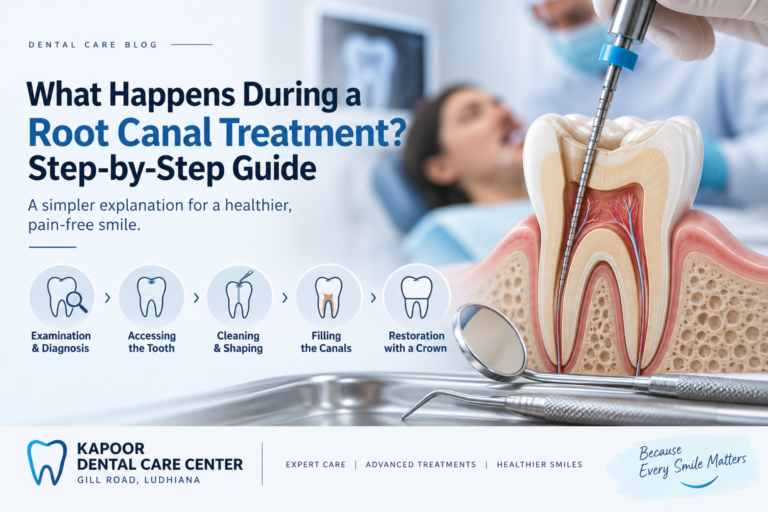
A severe toothache, sensitivity to hot and cold, swelling around a tooth, or pain while chewing can sometimes indicate a problem deep inside the tooth. When the soft tissue inside the tooth becomes inflamed or infected, a root canal treatment may be recommended to remove the infection and preserve the natural tooth.
Many people feel nervous when they hear the words “root canal.” However, modern root canal treatment is a routine dental procedure performed with local anesthesia and designed to be as comfortable as possible. The main purpose is to remove infected or inflamed pulp, clean and disinfect the root canals, seal them, and restore the tooth so it can continue to function.
If you have persistent tooth pain or have been advised to undergo root canal treatment, consulting an experienced dental professional can help you understand your condition and available treatment options.
What Is a Root Canal Treatment?
A root canal treatment, also known as endodontic treatment, is a procedure used to treat infection or inflammation inside a tooth.
Every tooth has an inner portion called the pulp. It contains nerves, blood vessels, and connective tissue. Deep tooth decay, cracks, trauma, repeated dental procedures, or other damage can cause the pulp to become inflamed or infected.
During root canal treatment, the affected pulp is removed. The inside of the tooth is then carefully cleaned, disinfected, shaped, filled, and sealed. The tooth can subsequently be restored with an appropriate filling or crown depending on how much tooth structure remains.
Why Might You Need a Root Canal?
A dentist may recommend root canal treatment when the pulp inside a tooth has become seriously inflamed or infected.
Some common causes include:
- Deep tooth decay
- A cracked or damaged tooth
- Dental trauma or injury
- Repeated dental procedures on the same tooth
- Infection inside the tooth
- Damage to the pulp caused by extensive decay
Some symptoms that may indicate the need for an evaluation include:
- Persistent or severe toothache
- Pain when biting or chewing
- Long-lasting sensitivity to hot or cold
- Swollen or tender gums
- A small pimple or abscess on the gums
- A chipped or cracked tooth
- Deep decay or discoloration of a tooth
However, symptoms can vary from person to person. A dental examination and appropriate imaging are necessary to determine whether root canal treatment is actually required.
What Happens During Root Canal Treatment?
The exact treatment process can vary depending on the tooth, the extent of infection, and the complexity of the root canal system. In many cases, treatment can be completed in one or two appointments.
Here is a step-by-step overview.
Step 1: Dental Examination and X-Ray
The first step is a detailed examination of the affected tooth.
Your dentist will assess your symptoms, examine the tooth and surrounding tissues, and may take an X-ray or other appropriate dental imaging. This helps the dentist understand the condition of the tooth and the shape and position of the roots.
The examination also helps determine whether root canal treatment is appropriate or whether another treatment may be more suitable.
Step 2: Local Anesthesia
Before treatment begins, local anesthesia is administered to numb the area around the affected tooth.
This helps make the procedure comfortable while the dentist works on the tooth. Modern root canal treatment is generally performed under local anesthesia, although sedation options may vary depending on the dental practice and individual patient requirements.
Step 3: Isolating the Tooth
The tooth is isolated from the rest of the mouth so that the treatment area remains clean and protected from saliva.
A dental dam may be used to isolate the tooth during the procedure. This provides a controlled treatment environment and helps prevent contamination while the root canals are being cleaned.
Step 4: Creating an Opening in the Tooth
Once the tooth is numb and isolated, the dentist creates a small opening through the crown of the tooth.
This opening provides access to the pulp chamber and root canals inside the tooth.
Specialized dental instruments are then used to access the infected or inflamed tissue.
Step 5: Removing the Infected Pulp
The infected or inflamed pulp is carefully removed from the pulp chamber and root canals.
This is an important part of the procedure because infected tissue and bacteria need to be removed from inside the tooth.
The objective is to eliminate the source of infection while preserving as much healthy tooth structure as possible.
Step 6: Cleaning and Shaping the Root Canals
After the pulp is removed, the root canals are carefully cleaned and shaped using specialized instruments.
The canals may have very small, narrow, or curved spaces, so careful cleaning and shaping are essential.
The dentist also disinfects the canals as part of the cleaning process. This helps reduce bacteria and prepares the canals for filling and sealing.
Step 7: Filling and Sealing the Canals
Once the canals have been properly cleaned and shaped, they are filled with a biocompatible material.
A commonly used material is gutta-percha, a rubber-like material used to fill and seal the cleaned root canals. Dental cement may also be used to help create an effective seal.
In some situations, the tooth may receive a temporary filling before the final restoration.
The purpose of sealing the canals is to help prevent bacteria from entering the treated space again.
Step 8: Restoring the Tooth
After root canal treatment, the tooth needs to be properly restored.
Depending on the amount of remaining tooth structure and the location of the tooth, the dentist may recommend a permanent filling, crown, or another suitable restoration.
A crown may be recommended when additional protection is needed to restore the tooth’s strength and function.
The final restoration is an important part of treatment because it helps protect the treated tooth from further damage and allows it to return to normal function.
Is Root Canal Treatment Painful?
One of the most common concerns about root canal treatment is pain.
Because local anesthesia is used during the procedure, patients generally should not experience significant pain while the dentist is performing the treatment. Some soreness or mild discomfort can occur after treatment as the tissues around the tooth recover.
If you are anxious about dental treatment, discuss your concerns with your dentist before the procedure. Understanding what will happen during treatment can also help reduce dental anxiety.
How Long Does Root Canal Treatment Take?
The treatment time depends on several factors, including:
- Which tooth needs treatment
- The number and shape of the root canals
- The severity of infection
- The complexity of the case
- Whether additional treatment is required
- The type of final restoration needed
Many root canal treatments can be completed in one or two appointments, although more complicated cases may require additional visits.
Your dentist can provide a more accurate estimate after examining your tooth.
What Should You Do After a Root Canal?
After treatment, your dentist will provide specific instructions based on your individual situation.
Some general considerations include:
- Avoid chewing hard foods on the treated tooth until your dentist advises that it is safe.
- Follow the prescribed medication instructions, if any.
- Maintain regular brushing and flossing.
- Attend your follow-up appointment.
- Complete the recommended permanent restoration.
- Contact your dentist if you experience significant or worsening pain, swelling, or other unusual symptoms.
It is particularly important not to delay the final restoration when one has been recommended. The treated tooth still needs protection after the root canal procedure.
Can a Root Canal Save Your Natural Tooth?
One of the major purposes of root canal treatment is to preserve the natural tooth whenever possible.
When the infected pulp is removed and the canals are cleaned, disinfected, filled, and sealed, the tooth can continue functioning after appropriate restoration. The American Association of Endodontists notes that properly treated and restored teeth can often remain functional for many years and, with proper care, may last a lifetime.
Saving a natural tooth can also help maintain normal chewing and avoid the need to replace an extracted tooth with another restoration.
When Should You Visit a Dentist?
Do not ignore persistent tooth pain or swelling.
You should consider scheduling a dental examination if you experience:
- Severe or persistent toothache
- Pain while chewing
- Prolonged sensitivity to hot or cold
- Swelling around the tooth
- Gum tenderness
- A recurring pimple on the gums
- A cracked or damaged tooth
- Deep tooth decay
- Tooth discoloration accompanied by other symptoms
Early evaluation can help identify the cause of the problem and allow your dentist to discuss suitable treatment options.
Root Canal Treatment at Kapoor Dental Care Center, Gill Road, Ludhiana
If you are looking for root canal treatment in Ludhiana, Kapoor Dental Care Center at Gill Road provides dental care for patients dealing with different oral health concerns.
At Kapoor Dental Care Center, Gill Road, Ludhiana, patients can discuss their dental symptoms with a dental professional and receive an evaluation to determine the appropriate course of treatment.
Whether you are dealing with persistent tooth pain, sensitivity, damaged teeth, or have already been advised to undergo a root canal, a proper dental examination is the first step.
You can learn more about the clinic and its dental services through the Kapoor Dental Care Center website.
Why Timely Dental Treatment Matters
A toothache may sometimes seem temporary, but persistent symptoms should not simply be ignored.
If the pulp inside a tooth becomes infected or severely inflamed, leaving the condition untreated can lead to continued pain or an abscess. A dentist can examine the tooth and determine whether root canal treatment, another restorative procedure, or a different approach is appropriate.
Timely dental care can also help preserve natural tooth structure and reduce the risk of the problem becoming more complicated.
Frequently Asked Questions About Root Canal Treatment
1. Is root canal treatment necessary for every toothache?
No. Toothache can have many different causes. A dentist needs to examine the tooth and determine the underlying problem before recommending root canal treatment.
2. How many appointments are required for a root canal?
Many root canal treatments can be completed in one or two appointments, but the number of visits depends on the tooth and the complexity of the treatment.
3. Can I eat after a root canal?
Your dentist will advise you when it is appropriate to eat. If your mouth is still numb from local anesthesia, you should generally avoid eating until normal sensation returns to prevent accidentally biting your cheek or tongue.
4. Does a root canal remove the entire tooth?
No. Root canal treatment is designed to remove the infected or inflamed pulp from inside the tooth while preserving the natural tooth structure.
5. Will the tooth need a crown after a root canal?
Not every tooth necessarily requires the same type of restoration. Depending on the tooth and how much structure remains, your dentist may recommend a crown or another restoration to protect it.
6. Can a root canal fail?
Although root canal treatment is designed to treat infection and preserve the tooth, some teeth may not heal as expected or can develop new problems later. In selected cases, retreatment or endodontic surgery may be considered.
Final Thoughts
A root canal treatment is a carefully planned dental procedure designed to remove infection or inflammation from inside a tooth while helping preserve the natural tooth.
From the initial examination and X-ray to anesthesia, cleaning, shaping, filling, sealing, and final restoration, each stage plays an important role in treating the affected tooth.
If you are experiencing persistent tooth pain, sensitivity, swelling, or discomfort while chewing, don’t delay a dental examination. For patients searching for root canal treatment in Ludhiana, Kapoor Dental Care Center, Gill Road, Ludhiana, can be contacted to discuss your dental concerns and treatment options.
Visit the Kapoor Dental Care Center website to learn more about dental care and available treatments.