
Tooth Extraction vs Root Canal: Which Treatment Is Better?
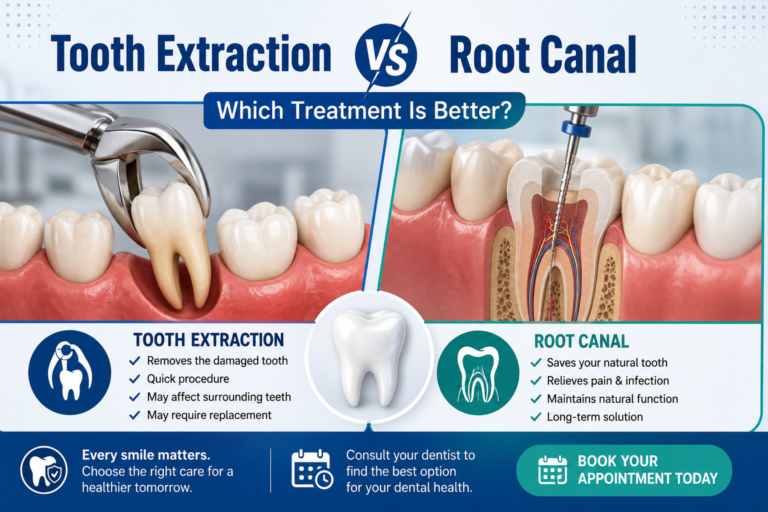
When a tooth becomes severely damaged or infected, one of the most common questions patients ask is, “Should I get a root canal or have the tooth extracted?” While both treatments are designed to address dental problems and relieve pain, they serve different purposes and are recommended based on the condition of the affected tooth.
Choosing the right treatment depends on several factors, including the extent of the damage, the health of the surrounding teeth and gums, and your long-term oral health goals. Understanding the differences between a root canal and a tooth extraction can help you make an informed decision with your dentist.
If you’re looking for expert dental care and personalized treatment recommendations, Kapoor Dental Care Center offers advanced diagnostic services and comprehensive restorative treatments to help preserve your oral health whenever possible. The clinic provides root canal therapy, tooth extractions, dental implants, crowns, and preventive dental care using modern techniques. (kapoordentalludhiana.in)
What Is a Root Canal?
A root canal is a dental procedure used to save a tooth that has become infected or severely damaged. Inside every tooth is a soft tissue called the dental pulp, which contains nerves and blood vessels. When this pulp becomes infected due to deep decay, cracks, or injury, it can cause significant pain and swelling.
During a root canal procedure, the infected pulp is carefully removed, the inside of the tooth is cleaned and disinfected, and the tooth is sealed to prevent future infection. In many cases, a dental crown is placed afterward to restore strength and function.
The primary goal of a root canal is to preserve your natural tooth while eliminating pain and infection.
What Is Tooth Extraction?
Tooth extraction involves removing a tooth from its socket.
Dentists usually recommend extraction when a tooth is too severely damaged or infected to be successfully restored. Extraction may also be necessary for impacted teeth, advanced gum disease, overcrowding before orthodontic treatment, or teeth with extensive fractures.
Although removing the tooth solves the immediate problem, replacing the missing tooth is often recommended to maintain proper chewing function, prevent neighboring teeth from shifting, and preserve jawbone health.
When Is a Root Canal the Better Choice?
Whenever possible, dentists prefer to save a natural tooth.
A root canal may be recommended if:
- The tooth can still be restored.
- The infection has not severely damaged the surrounding bone.
- The tooth structure remains strong enough to support a crown.
- Preserving natural chewing function is possible.
Keeping your natural tooth often provides better long-term function than replacing it with an artificial restoration.
Root canal treatment has a high success rate and allows many patients to keep their natural teeth for many years with proper care.
When Is Tooth Extraction Necessary?
Sometimes saving a tooth is no longer possible.
Extraction may be recommended if:
- The tooth is severely fractured below the gumline.
- Extensive decay has destroyed most of the tooth.
- Advanced gum disease has weakened tooth support.
- Repeated infections cannot be successfully treated.
- The tooth cannot be restored safely.
In these situations, removing the tooth may be the healthiest option for protecting the surrounding teeth and gums.
Which Treatment Is More Comfortable?
Many patients believe tooth extraction is easier than a root canal, but modern dentistry has made both procedures much more comfortable than in the past.
With local anesthesia and advanced treatment techniques, both procedures are generally performed with minimal discomfort.
A root canal often relieves pain caused by infection while allowing you to keep your natural tooth. Extraction may involve a slightly longer healing period because the body must recover after the tooth is removed.
Your dentist will explain what to expect based on your individual treatment plan.
Long-Term Benefits of Saving Your Natural Tooth
Whenever possible, preserving your natural tooth offers several important advantages.
These include:
- Maintaining natural chewing ability
- Preserving jawbone structure
- Preventing neighboring teeth from shifting
- Maintaining a natural appearance
- Avoiding additional replacement procedures
For these reasons, dentists usually recommend saving a tooth whenever it can be restored successfully.
Replacing a Missing Tooth After Extraction
If a tooth must be extracted, replacing it is often the next step.
Depending on your oral health and treatment goals, replacement options may include:
- Dental implants
- Dental bridges
- Partial dentures
Replacing a missing tooth helps restore appearance, chewing function, and overall oral health while preventing future complications.
Your dentist will recommend the option that best fits your needs.
Why Choose Kapoor Dental Care Center?
Choosing the right dental clinic is just as important as choosing the right treatment.
Kapoor Dental Care Center provides comprehensive diagnostic evaluations to determine whether a tooth can be saved or whether extraction is the most appropriate option.
The clinic offers advanced root canal treatment, tooth extractions, dental crowns, implants, cosmetic dentistry, and preventive care using modern equipment and patient-focused techniques.
Every treatment plan is personalized to help patients achieve long-term oral health while preserving natural teeth whenever possible.
The Importance of Early Treatment
Ignoring tooth pain can allow infections to spread and increase the likelihood that extraction will become necessary.
Early diagnosis gives dentists more opportunities to save natural teeth through conservative treatment.
If you experience symptoms such as:
- Persistent tooth pain
- Swelling around a tooth
- Sensitivity to hot or cold
- Pain while chewing
- Gum swelling or drainage
You should schedule a dental examination as soon as possible.
If you’re looking for an experienced dental clinic in Ludhiana, early professional evaluation can often prevent more extensive treatment later.
Prevention Is Always Better Than Treatment
Many root canals and extractions can be avoided through good oral hygiene and regular dental checkups.
Simple preventive habits include:
- Brushing twice daily
- Flossing every day
- Limiting sugary foods and drinks
- Visiting your dentist every six months
- Treating cavities before they become severe
Preventive dental care helps protect your natural teeth and reduces the need for complex procedures.
For complete preventive dental care, regular checkups and professional cleanings play an essential role in maintaining long-term oral health.
Final Thoughts
When comparing tooth extraction and root canal treatment, there is no one-size-fits-all answer. The best option depends on the condition of your tooth, your overall oral health, and your dentist’s evaluation.
Whenever possible, preserving your natural tooth through a root canal is generally the preferred approach because it maintains normal function and supports long-term oral health. However, when a tooth cannot be restored, extraction followed by an appropriate replacement may be the healthiest solution.
If you’re experiencing tooth pain or infection, Kapoor Dental Care Center offers expert diagnosis, personalized treatment plans, and advanced dental care to help you restore your smile and protect your oral health with confidence.